I discovered Clémentine Zill on Twitch, where she talked about making streams accessible. Her approach caught my attention. It does not come from a product team or an institutional setting, but from someone with direct lived experience, navigating imperfect tools on a daily basis.
When you work in accessibility, it can feel like things are moving in the right direction. You regularly talk with committed people, share good practices, and see genuine initiatives emerge. Over time, you might assume these efforts are visible and tangible for everyone but that's not always the case. Many disabled people have not yet noticed these improvements, or do not benefit from them in practice.
That's why I care about having conversations outside tech. Accessibility is not only shaped through roadmaps, audits, or design systems. It is also measured through real-life use, and through what people end up giving up on.
It was in this context that I spoke with Clementine, a diversity, equity, and inclusion consultant specialising in disability and accessibility, a member of the French activist group "Les Dévalideuses", and a Twitch streamer.
I wanted to understand her experience as a low-vision user, but also to hear her perspective on current accessibility efforts in tech. What they actually enable. Where they fall short. And what difference they make, in very concrete terms, in everyday life.
Having low vision in a digital world
Can you describe your disability?
I have low vision. I have 2/10 visual acuity. I also have a form of colour blindness. I was told there are several issues involved, affecting different types of colour perception. I struggle when there is white text on blue, red on black, or yellow on black. Anything highlighted in fluorescent colours is also difficult for me.
Alongside that, I am short-sighted and astigmatic, but that is corrected with glasses.
I also have a coloured spot in the centre of my vision that flickers. The spot is constantly moving, and it sort of looks like a spider’s web.
However, I have very good peripheral vision. My brain has learned to compensate that way. In everyday life, I never look straight at things. I look slightly above the spot to use my peripheral vision instead. But people do not notice.
Have you found accessibility tools adapted to your disability?
I have tried tools designed for colour-blind people, but they do not necessarily help me. When colours are well contrasted, I do see better.
But it also happens that I struggle to see something and I am told the contrast is sufficient according to Color contrast checker. That is quite frustrating, because my vision does not represent all forms of colour blindness. Maybe I'm the only one with this specific issue.
Do you use assistive technologies?
I use the built-in zoom features on my phone and my computer. I increase both the font size and the overall display size. Occasionally, I use the screen magnifier, but I generally manage without it. It's only when I want to see something very small.
People suggested I learn how to use screen readers, but it did not work out. I think I do not want to, and I do not feel an urgent need as long as I do not rely on them directly. Learning on your own is complicated.
Have you ever tried using a screen reader?
Actually, I wanted to read a Google Doc with a screen reader to rest my eyes. But I struggled for 45 minutes just to access the text, so I eventually gave up. I told myself I might try again in three years.
Accessibility in culture and entertainment
What other barriers do you face on the internet?
Instagram is a disaster, but I have to use it for my freelance work.
Some of the app’s text is enlarged thanks to my phone settings, but there are other parts where it does not work at all. Conversations, for example, are displayed in a tiny font.
Sometimes elements overlap, like subtitles on Reels.

I also do not have access to image alternative text because I do not use a screen reader. On Bluesky, however, I can read alt text without a screen reader, if people have added it.
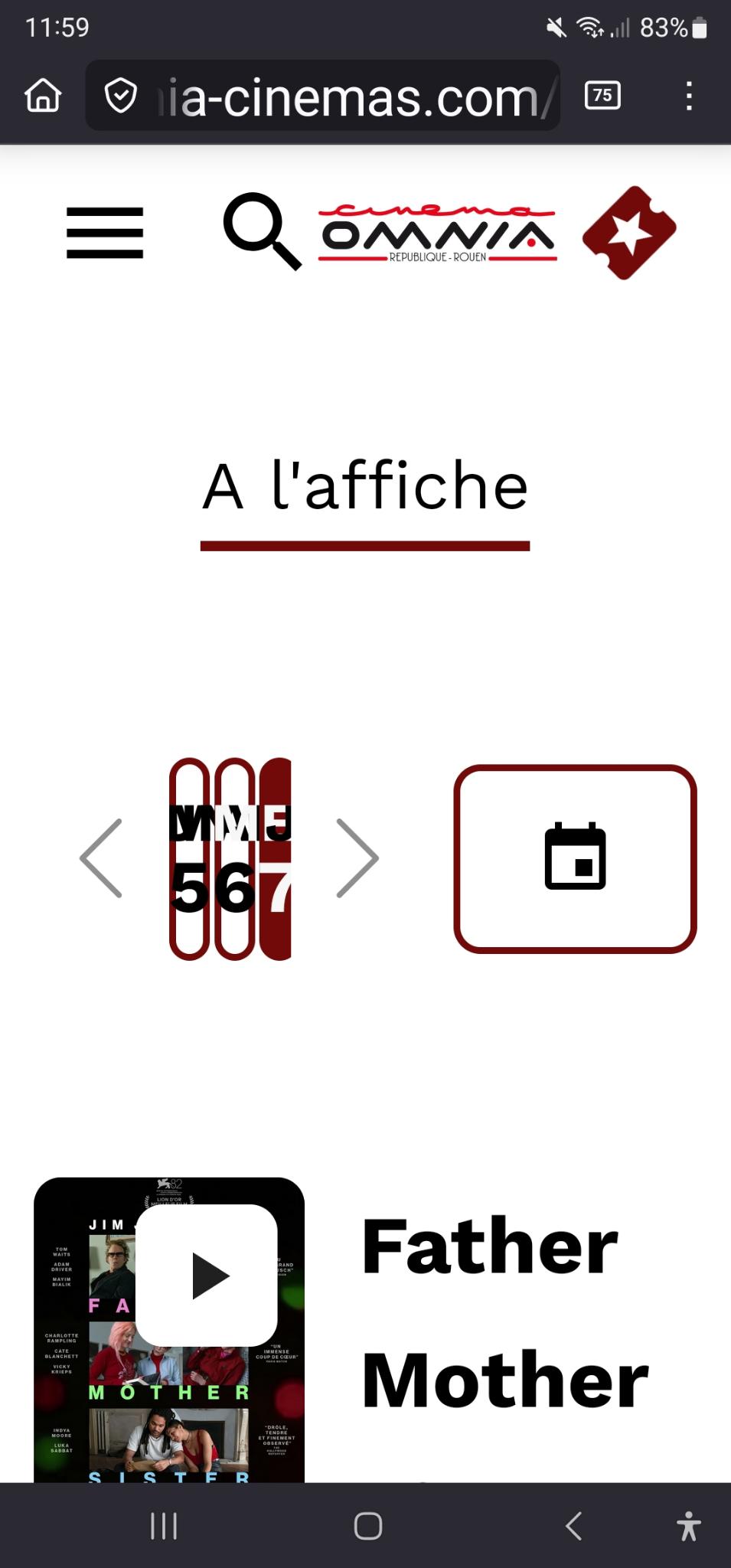
And of course, there are many websites I cannot access, like the website of my local cinema. I cannot use it on my phone because it is so zoomed in and so poorly optimised that I cannot access the information. It really gets on my nerves not to be able to see the programme.
Can you watch a film with subtitles, or do you need audio description?
I can go to the cinema without audio description if the film is in a language I understand. But I cannot watch international films if I need to read subtitles. I asked my cinema, and they told me they only provide audio description for French films. That seriously limits what I can watch.
It's the same on television, because I would have to sit very close to the screen to read the subtitles. That would not be comfortable. So I'm lucky to speak both French and English.
I'm talking about films here, but I have the same issue with video games. The games that are accessible to me are not fast-paced games. They are more narrative-driven games.
Video games are extremely important for disabled people. We are more likely to experience mental health issues such as depression or anxiety. One way to reduce isolation when you have fragile health is through digital spaces, social media, and video games. Many games allow you to join a community and make real friends. That's why accessibility matters in entertainment.
Entertainment is political. Everyone should have access to it, just like culture. That's why accessibility testing in games is close to my heart. Over time, I have become an expert in inaccessibility. I spend my time decoding what does not work. Figuring out that a button disappeared because I zoomed in, or that a piece of text is unreadable.
It is unfair to force me to use tools that are not adapted.
You started your own Twitch channel. How did accessibility factor into that?
I started by hosting the Dévalideuses’ Twitch channel. That’s where I learned everything. After a while, I wanted more freedom in the content I was making, so I launched my own channel. I’ve been streaming every week for a year and a half.
I also watch live streams by people I know, but the chat on Twitch is not very accessible. I can’t zoom in enough to really use it properly.
That’s why I don’t go there as often as I’d like. I’m mostly on Twitch as a content creator, even though the streaming software itself isn’t very usable.
On OBS, very few accessibility settings actually work. It used to adapt to my screen size, based on how I had set it up. Then there was an update and everything reverted. Overnight, I couldn’t use it anymore. I clicked on the wrong buttons during streams because I couldn’t see properly. It still happens, actually. I mostly have to guess my way through.
Working while disabled
What adjustments do you need to work?
Technically speaking, I just need a large screen. I use a big curved monitor and a screen riser so it is roughly at eye level.
Beyond that, I need flexibility. I cannot work 35 hours a week. I need to work closer to 20 hours.
I also need to be offered accessible tools. For example, in a previous job I was asked to use Hootsuite to publish simultaneously on Instagram, Facebook, and Twitter. But it was not accessible to me at all. The Meta Business Suite is not accessible either. It was hell.
That puts me in situations that cost me a huge amount of energy and cause a lot of frustration. It is infuriating, because it is unfair to force me to use tools that are not adapted, just to ensure productivity on the employer’s side.
That is also why I experienced burnout during my civic service. I was putting pressure on myself to publish on social media at specific times, to meet deadlines. But those productivity-related pressures are particularly harmful for disabled people.
Why is capitalism not compatible with disability?
When I finished my studies, people talked to me about flexible 35-hour weeks. But in reality, the expectation was that I would work 50 hours, because I was fresh out of school and had to prove my worth in a highly competitive environment.
I wanted to work for large European institutions. But I stopped myself, because I was not getting any responses to my applications and I knew I would not be able to keep up with the pace. I never found part-time work, or when I did, it was not really respected. I constantly received remarks. That is why so many disabled people are pushed away from the job market.
And when you mention your RQTH status (official recognition as a disabled worker) on your CV, you often do not get an interview. Or you mention it at the end of the interview and then you never hear back. It is hard to know when discrimination happens, and hard to prove it. That is why many of us work freelance. But that maintains precariousness for people who are already vulnerable.
I have even been discriminated against because of my disability in the non-profit sector, which was a huge disappointment. In spaces where shared values are supposed to exist, I was still discriminated against. That's when I realised I'd probably never find a job where I'd be treated properly.
How easy is it to talk about your disability with the people you work with?
I am very open to answering people’s questions, and I prefer being asked rather than dealing with awkwardness. Because disability makes people uncomfortable. Either they think it is inappropriate to ask questions, or they are openly ableist. I would rather be asked directly what my needs are.
And if we are going to use a new tool, I would rather be asked in advance whether I will be able to use it properly.
For example, I was expected to take notes during meetings. So I asked the team if we could use size 14 for the text. Some people had the nerve to tell me it was difficult for them because it was too big on their screen.
You constantly have to remind people about your access needs. That is something I deal with all the time, even within my activist group, because we are not disabled in the same ways.
Some people are genuinely curious, though. For instance, it has happened that people saw my screen with very large text and said, “Wow, how come you use your screen like that?” I understand that. But when people say, “Are you blind or something?”, that is completely different. I cannot stand that anymore.
Is your disability considered invisible?
Yes, people do not see that I am disabled. But when they look at my phone, they see that something's wrong. That's when I get those very unpleasant remarks. If I had a white cane, sunglasses, and a guide dog, people would not make those comments. They allow themselves to say certain things because I do not look disabled.
It cuts both ways. On the one hand, I can hide the fact that I am disabled in everyday life. I choose who I tell, and in what context. But I have also been denied accessibility services because I did not look disabled enough.
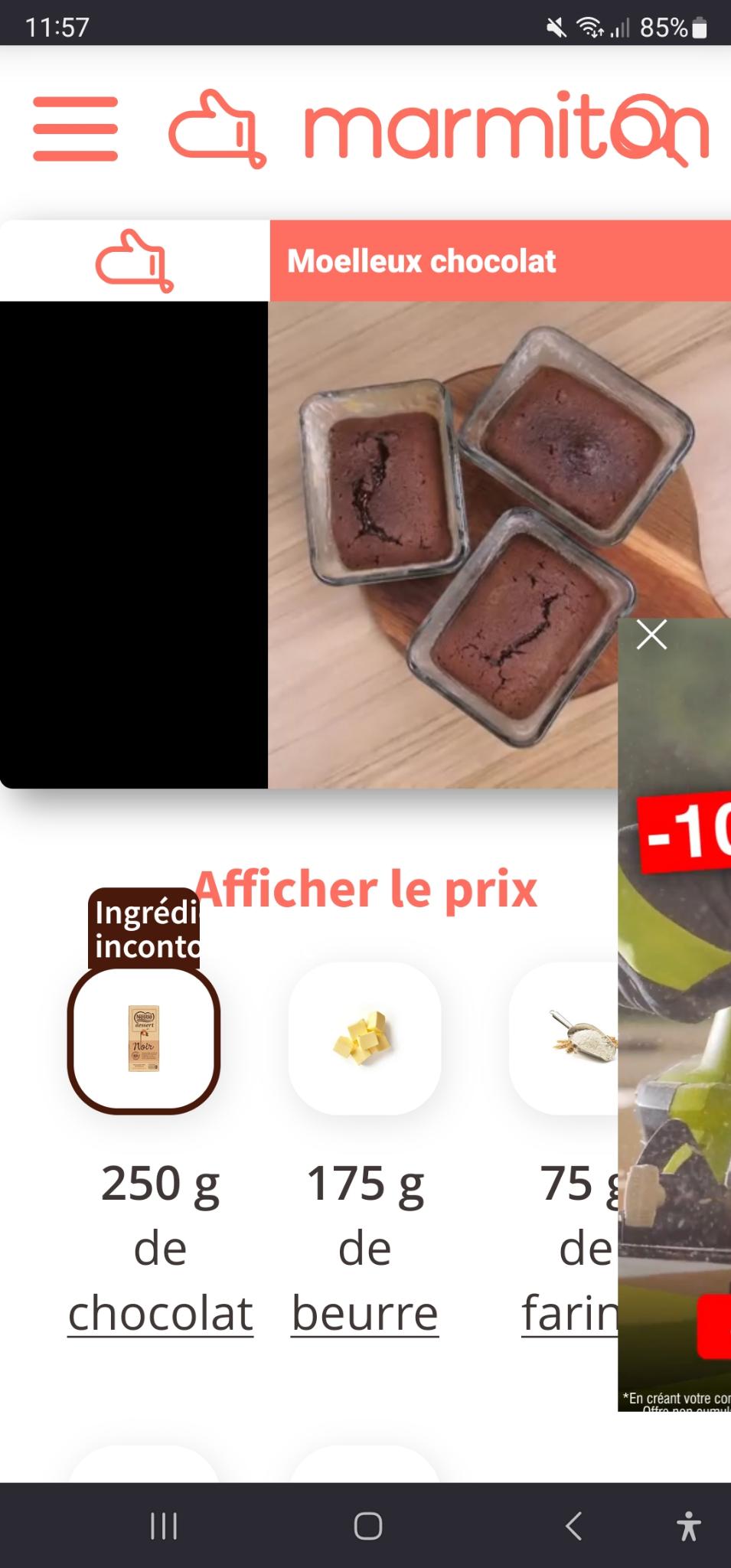
On my phone, there are video pop-ups I can't get rid of.
Does your activism help you make your needs heard?
I find it easier to ask within activist spaces. I know how to articulate my needs better. But that does not mean I express them more with people close to me.
I feel like I have to ask for everything a thousand times, and people forget. And I have noticed that when I get angry, it usually goes badly.
At some point, when you feel like people are not listening to you or respecting you, it makes you furious. Sometimes it only takes one last straw. But that is also because there were already fifteen other remarks that day. It's one more thing I could not access.
Even within activist spaces, I keep repeating the same things. Accessibility is for everyone. It is not just about physical accessibility for wheelchair users. It is not just about subtitles. It also includes quiet spaces, health protocols, Easy Read formats, and more. Everything has to be done properly, for everyone.
What tech still fails to see
Does the tech industry pay enough attention to accessibility?
No, not at all. Sometimes I feel like I do not have access to the same digital world as a non-disabled person. My partner might say, “Can you check the showtime for that film?” And immediately I feel frustrated, without even realising why. It's only afterwards that I understand this frustration comes from knowing in advance that I will not be able to access the website. I know I will not get that information on my phone, so I have to turn on my computer.
It's the same with cooking recipes. On my phone, there are video pop-ups I can't get rid of. I can only see one line of the recipe at a time. I am not going to go back and forth between my computer and the kitchen twenty-five times while cooking!
People do not realise this. These are everyday situations where I know I am going to struggle before I even start. I get angry in situations where a non-disabled person would have no problem at all. They would not have to think about all this in advance.
There are many things I do not allow myself to do, because I know what it will cost me. Constantly anticipating these obstacles creates a huge mental load. When you are disabled, you are always adapting to so many things. Making a chocolate cake should not be infuriating.
What do you avoid because of the lack of digital accessibility?
I would never imagine myself becoming a designer, even though I love it. It is almost a hobby for me, because Canva is relatively accessible and I have learned how to use it well. But professional design tools are not accessible at all.
When I open Photoshop, for example, it's a disaster. There are no accessibility options whatsoever.
It's the same with video editing software. I was recommended many tools, but none of them were accessible.
So there is a barrier. Since there is no alternative, it is simply not possible for me. I am inevitably excluded.
If these tools were accessible, especially to blind people, maybe we would discover incredibly interesting things about how they perceive the world. Maybe we would reinvent the way websites are designed, instead of relying on bars you have to click to open drop-down menus. Maybe we would find other solutions. In any case, it raises a lot of questions for me.
There are many things I do not allow myself to do, because I know what it will cost me.
Further reading
- Be My Eyes: This app connects blind or low vision users who want assistance, with volunteers and companies across the world, through live video and AI.
- Accessibility requirements for people with low vision (W3C): This document describes what people with low vision need for electronic content, tools, and technologies to be accessible.
- Android low vision accessibility tools: Tools and features by Android for vision impaired users including Lookout and TalkBack settings.
- Apple accessibility features for people with low vision: Built-in accessibility features for vision on iPhones.
- Blind and low vision support at work (Australian Government): How to support employees who are blind or have vision loss, including changes to work areas and tasks or using assistive technology.
- Being blind on the internet: A conversation between a blind digital accessibility consultant and a UX designer.